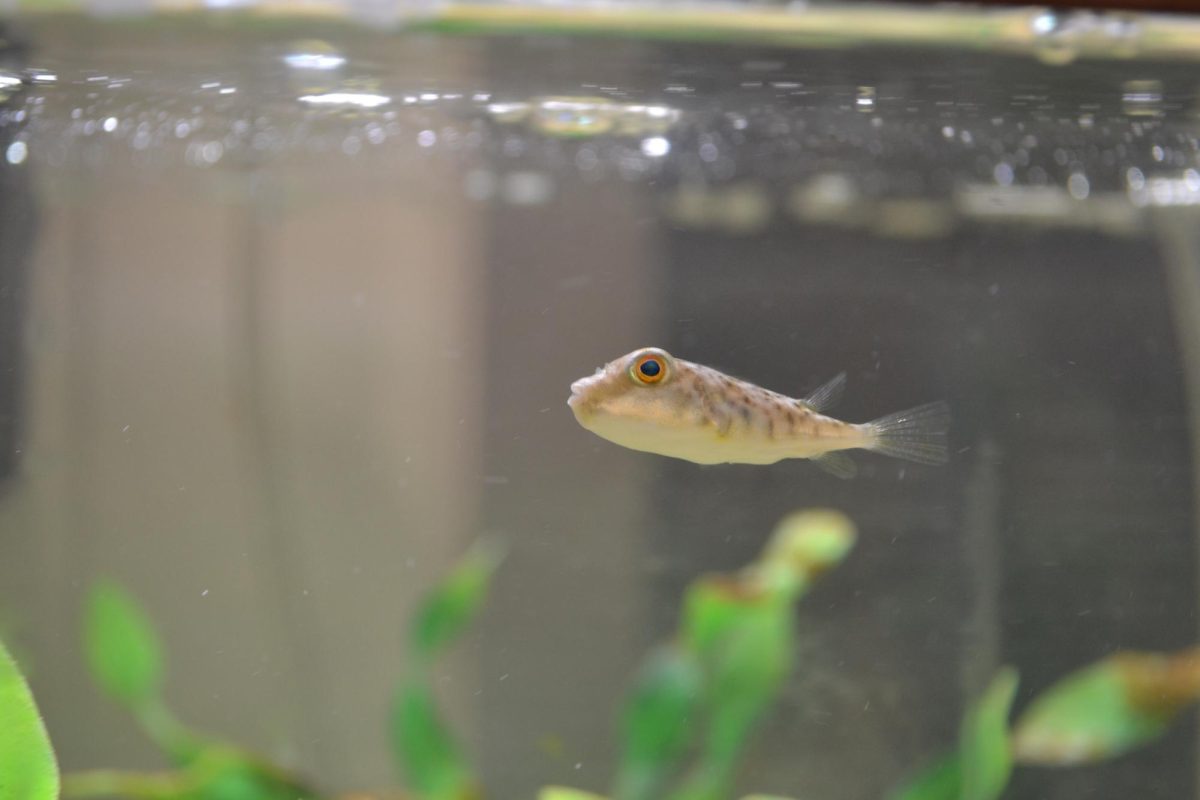
Students may have noticed the appearance of several fish tanks in the library at the beginning of this school year and just recently with the addition of several new species of fish. This prompts the questions: Why are there fish tanks in the library and where did the fish come from?
It all began with a vision from our dedicated librarian Mrs. Brittany Tignor. In the summer of 2025, she thought of ways in which she could bring every student to catch fish in the bay, since many students had never gone fishing before or knew about the aquatic inhabitants of the grand Chesapeake Bay. However, due to physical and other restraints this was largely impossible, so instead of bringing the students to the bay, Tignor thought that she would bring the bay to the students.
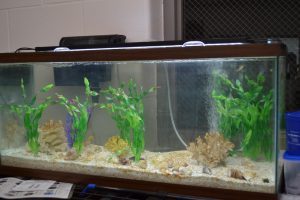
Upon researching extensively and working with Maryland Coastal Bays, she received a grant for the library in which measures were established for the configuration process and programs were outlined for students to engage and work with the fish. In order to set up the equipment, Mr. Jim Krall, former Decatur Marine Biology teacher, donated the tanks and filters, and Tignor, along with her husband and kids, made the long journey to the bay to syphon water, which ended up being a total of 180 gallons. Tignor then collected substrate crushed coral and frozen shrimp, squid, and brine essential for the fish’s well being and habitat.
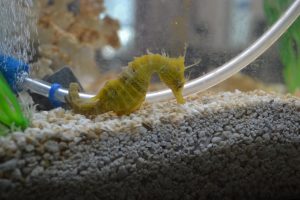
Tignor however, did not have a say in the types of fish that would be featured in the tanks, instead Maryland’s Department of Nature Resources (DNR) oversaw the collection of specimens, ultimately adding pufferfish, hermit crabs, sea horses, kingfish, and blennies to the tanks. Students have voted on the names of the fish, and they will be announced soon.
So, one may ask, what can students do? Students can gain service-learning hours by assisting in the upkeep of the fish tanks, feeding the fish twice a day, monitoring the temperature, and cleaning the tanks. Students can also work with Tignor and their science teachers to identify fish in the tanks and learn about them with the use of a student led observation station and a bulletin board. That is why there are fish tanks in the library.